

 |
 |
|
 |
|
 |
|
 |
|
 |


●
WiMAX通信事業者による調査において携帯電話サービスとVoIP用途として強い関心を示す。
ロンドン(イギリス)2010年8月5日にて市場調査会社Infonetics Research社 は、本日WiMAXに関する継続リサーチサービス(CRS)(及び関連するアナリストのレポートと調査)の一環としてWiMAXサービス戦略:グローバルサービスプロバイダー調査からの抜粋を発表した。
アナリストのレポート
「調査結果のいくつかは驚くべきものです。特に当社が調査したサービスプロバイダーサーベイの3分の2はWiMAXを携帯電話網サービス用途に2012年までに使用するつもりです、もしくはその時までにWiMAX上でVoIPサービスを提供するという事実があります。このことは、将来においてWiMAXの環境がよりリッチになることを示しているが、同時に重要な課題、つまり、特に携帯電話が使用可能になるWiMAXの範囲の狭さと発展途上国における低いARPU(加入者当たりの平均売上)に対応した価格モデルの構築の困難さ、が残っていることを当社の調査は示しました。もしもWiMAXが長期的なブロードバンド技術として疑う余地のない潜在力を発揮するのであれば、WiMAX業界はこれらの課題に対して時間と戦いつつ大急ぎで対応していきます。」とInfonetics Research社のWiMAX、マイクロ波、モバイル機器関連ダイレクティングアナリストのRichard Webb氏はコメントする。
WIMAX サーベイの注目点
- 現在、固定/移動式基本ブロードバンドサービスがWiMAX 市場において優位に立っている。しかしサービスプロバイダーはサービスを多様化し、2012年までにこれらのサービスをWiMAX上で提供する計画である。
- 世界の大部分の地域においてブロードバンドアクセス「ワイヤレスDSL」ソリューションに対する変わらぬ需要がある。
- アメリカのような先進国においてでさえも、サービスが行き届いていない地域がありWiMAXにとって絶好の機会がある。
- 回答頂いたサービスプロバイダーの64%が2012年までに全携帯電話網にサービスを提供する計画であり、これはInfonetics社の2010年の調査の数値である24%から上昇している。
- 最初はUSBドングルが移動式モバイルサービスの選別機器になりそうであるが、全携帯電話網にサービス提供はスマートフォンによるデータ通信と音声通信の結合から実現しそうである。
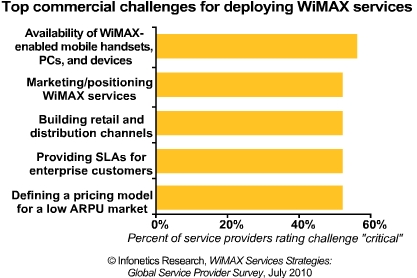
- WiMAX利用可能携帯電話の可用性が回答サービスプロバイダーにとっての商業上の課題リストの第一位となる。
- 他の商業上の最重要課題になりそうなものとしては、 WiMAX のマーケティング、ポジショニング、小売および流通チャネルの構築、企業顧客向けのサービス内容合意書の提供、及びARPU(加入者当たりの平均売上)の低い市場用の価格モデルの定義が含まれる。
本調査について
- WiMAXサービス戦略:グローバルサービスプロバイダー調査のために、Infonetics社は25のWiMAX専業事業者、固定回線の現役のプロバイダー、競争相手の固定回線のプロバイダー、そして携帯電話事業者における購買決定者を調査してWiMAX事業者の戦略的概要を把握した。本調査はWiMAXネットワークがどのようにそしてなぜ敷設されたのかについての明確な理解、サービスが提供された理論的根拠、ビジネスモデル、ターゲット市場、そしてWiMAX事業者が予測している現在から2012年までの間の加入者数と収益の数値を提供する。
原文
WiMAX carrier survey shows strong interest in WiMAX for mobility services and VoIP
London, UNITED KINGDOM, August 5, 2010-Market research firm Infonetics Research (http://www.infonetics.com) today released excerpts from WiMAX Services Strategies: Global Service Provider Survey, as part of its Continuous Research Service (CRS) series of WiMAX-related analyst notes and surveys.
ANALYST NOTE
“Some of the strategic findings in this report are surprising: in particular, the fact that two-thirds of the service providers we surveyed intend to use WiMAX for mobility-based services by 2012, or that over 90% expect to offer VoIP over WiMAX by then. This indicates a richer service environment for WiMAX in the future, but at the same time, our survey showed that key challenges remain; specifically, the limited range of WiMAX-enabled mobile devices, and the difficulty of building low-ARPU pricing models for developing countries. The WiMAX industry is up against the clock to address these challenges if it is to fulfill its undoubted potential as a long-term broadband technology,” notes Richard Webb, directing analyst for WiMAX, microwave, and mobile devices at Infonetics Research.
SELECT WIMAX STRATEGIES SURVEY HIGHLIGHTS
- Fixed/nomadic basic broadband services dominate the WiMAX market currently, but service providers plan to diversify the services they offer over WiMAX by 2012
- There is continued demand for a broadband access "wireless DSL" solution in most regions worldwide
- Even in developed countries, such as the US, there are portions of the geography that remain under-served and are a ripe opportunity for WiMAX
- 64% of service provider respondents plan to offer full mobility by 2012, up from 24% in Infonetics’ 2010 survey
- Full mobility is likely to be smartphone-oriented, combining data mobility and voice, though initially USB dongles will be the device of choice for nomadic/mobile services
- Availability of WiMAX-enabled mobile devices tops the list of respondents’ commercial challenges
- Other top commercial challenges include marketing and positioning WiMAX services, building retail and distribution channels, providing service level agreements for enterprise customers, and defining a pricing model for a low-ARPU market
ABOUT THE SURVEY
For the WiMAX Services Strategies: Global Service Provider Survey, Infonetics surveyed purchase decision-makers at 25 WiMAX-only operators, fixed-line incumbents, competitive fixed-line providers, and mobile operators to capture a strategic overview of WiMAX operators. The survey provides a clear understanding of how and why WiMAX networks are being deployed, the rationale behind the services offered, the business model, the target markets, and the subscriber and revenue numbers operators are projecting between now and 2012.
